
The cardio-versus-weights debate is one of the most common questions new gym members ask. The honest answer is that it isn’t either/or. Each does a different job, and the right mix depends on your goal, schedule and what you’ll actually keep doing.
Key takeaways
- Weight loss is driven mainly by eating fewer calories than you burn, over time.
- Cardio typically burns more calories per minute; strength training helps keep muscle while you lose fat.
- In a well-known 8-month trial, aerobic training reduced body mass and fat mass more than resistance training, while resistance training increased lean mass (Willis et al., 2012).
- You can’t spot-reduce fat from one area by training that body part.
- A gradual, sustainable rate of loss is generally recommended; individual results vary.
Is cardio or strength training better for weight loss?
For pure calorie burn, cardio usually wins per session; for changing body shape and keeping weight off, strength training adds benefits cardio can’t. Research supports doing both. In the STRRIDE AT/RT trial, adults with overweight who did aerobic training lost more body mass and fat mass than those who only did resistance training, while resistance training increased lean mass. The group combining both improved overall body composition.
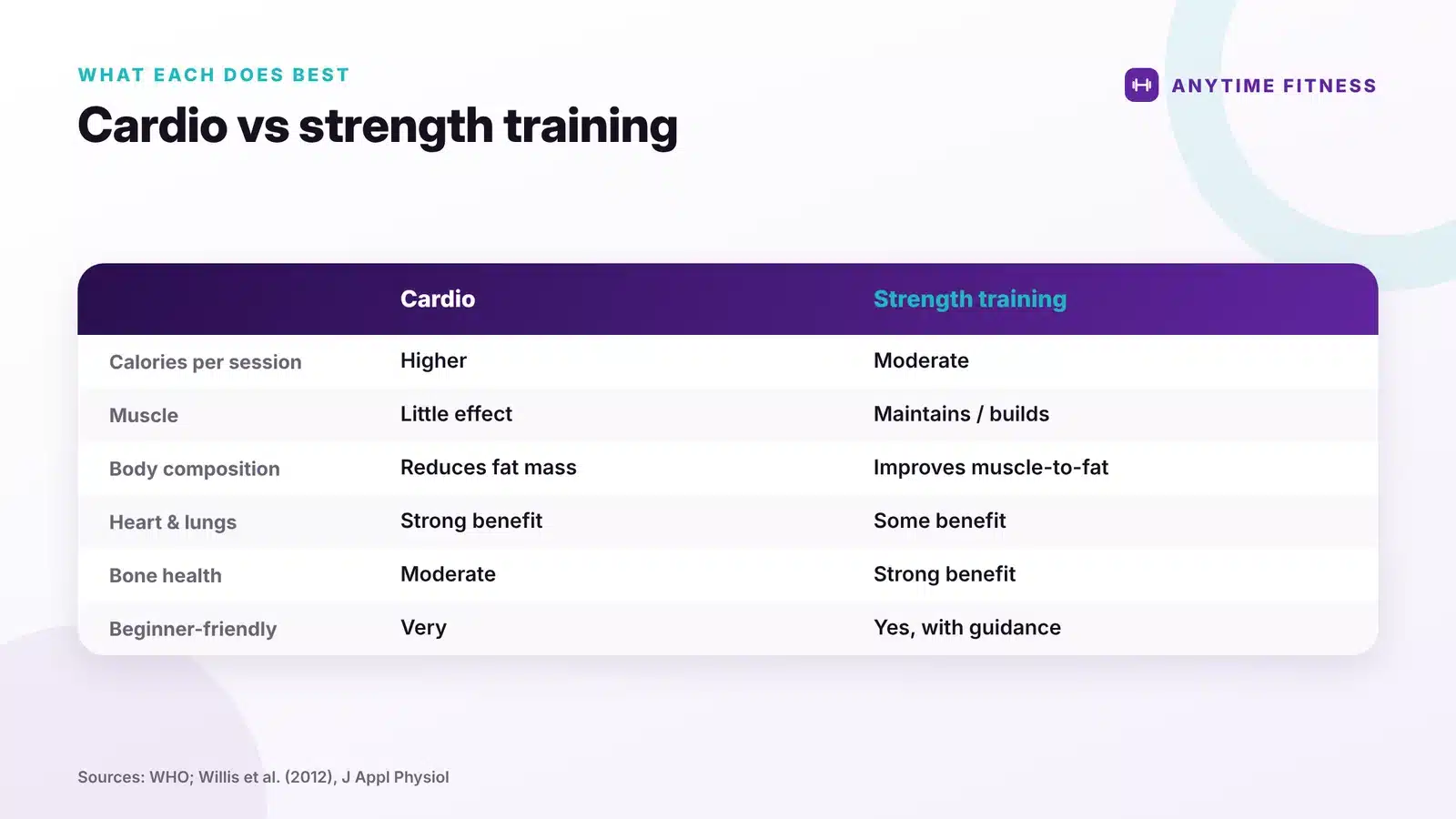
| Factor | Cardio | Strength training |
|---|---|---|
| Calories burned during session | Higher for the same time | Moderate |
| Muscle mass | Little effect | Maintains or builds muscle |
| Body shape / composition | Reduces fat mass | Improves muscle-to-fat ratio |
| Heart and lung fitness | Strong benefit | Some benefit |
| Bone health | Moderate (weight-bearing types) | Strong benefit |
| Beginner-friendly | Very (walking, cycling) | Yes, with guidance on form |
Is strength training good for weight loss?
Yes. Strength training supports weight management by helping preserve or build lean muscle while you follow an appropriate calorie deficit. Without it, a portion of the weight lost through dieting can come from muscle. Keeping muscle helps you look firmer, stay stronger and maintain your results.
How much does diet matter compared with exercise?
Diet usually has the bigger influence on weight loss, while exercise has the bigger influence on fitness, muscle and keeping weight off. It’s much easier to eat an extra 300 calories than to burn them. Focus on regular meals built around protein, vegetables, dal or pulses and whole grains, and keep fried snacks, sweets and sugary drinks occasional. Our high-protein Indian food guide can help.
A sample weekly plan that combines both
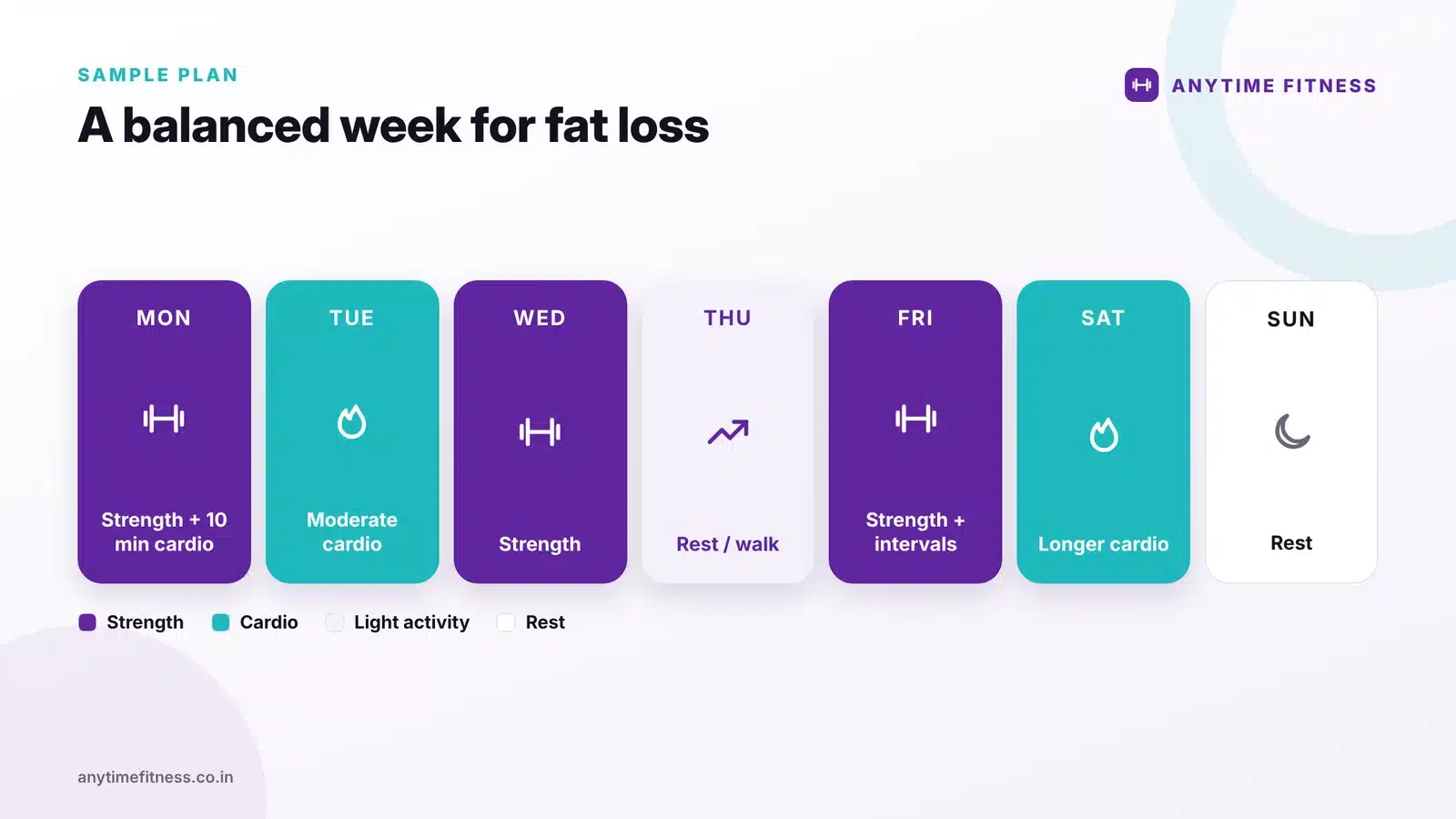
| Day | Session | Time |
|---|---|---|
| Monday | Full-body strength + 10 min easy cardio | 50–60 min |
| Tuesday | Moderate cardio (brisk walk, cycle, cross-trainer) | 30–40 min |
| Wednesday | Full-body strength | 45–60 min |
| Thursday | Rest or easy walk | — |
| Friday | Full-body strength + intervals (optional) | 50–60 min |
| Saturday | Longer cardio or sport | 40–60 min |
| Sunday | Rest | — |
New to strength training? Start with our 4-week beginner gym workout plan.
Should you do cardio before or after weights?
If strength is your priority, lift first and do cardio afterwards, so you’re fresh for the exercises that need the most technique. A short 5–10 minute cardio warm-up before lifting is fine. On days focused on endurance, do cardio first.
Myths that slow people down
- “Lifting weights makes women bulky.” Building large muscles takes years of specific training and eating; most women get stronger and leaner.
- “Crunches burn belly fat.” Spot reduction doesn’t work; fat loss happens across the body.
- “You must sweat a lot for a workout to count.” Sweat reflects temperature and individual differences, not fat loss.
- “More cardio is always better.” Excessive cardio with too few calories can increase fatigue and muscle loss.
How fast can you expect to lose weight?
A gradual rate is generally considered safer and easier to sustain; the NHS weight loss plan, for example, suggests aiming for 0.5–1 kg a week. Progress is rarely linear, and individual results vary with age, sleep, stress, medication and health conditions. Track waist measurement, strength and energy as well as the scale.
If you have a medical condition, are pregnant or are taking medication that affects weight, speak to a doctor or registered dietitian before changing your diet or exercise routine.
Want a routine that fits your schedule?
See how Anytime Fitness clubs make it easier to train consistently with 24/7 access.
In summary
Use both. Strength train two or three times a week to keep muscle, add cardio to raise your weekly activity, and let your eating habits drive the calorie deficit. Consistency over months matters far more than the perfect workout.
Frequently asked questions
Can I lose weight by doing only weight training?
Yes, if you also maintain a calorie deficit. Weight training alone burns fewer calories than cardio per session, so results may be slower, but it helps preserve muscle. Adding some cardio or daily walking usually helps.
Is walking enough cardio for weight loss?
Brisk walking counts as moderate activity and is a great base. Combined with good eating habits and strength training, regular walking can support weight loss.
How many days of cardio should I do to lose weight?
Most people do well with cardio on two to four days a week, adding up to 150–300 minutes of moderate activity, alongside two or three strength sessions.
Should I do cardio before or after weights?
If building strength is your priority, lift first and do cardio afterwards. A short cardio warm-up before lifting is fine.
Does weight training make women bulky?
No. Building significant muscle takes years of specific training and eating. Most women who lift become stronger and more toned.
Can I reduce belly fat with exercise?
You can’t target fat in one area. Overall fat loss through a calorie deficit, combined with regular exercise, reduces belly fat over time.
What is a safe rate of weight loss?
A gradual rate is generally recommended; the NHS weight loss plan suggests 0.5–1 kg a week. Individual results vary, so speak to a professional if you have health conditions.
Sources
- World Health Organization: Physical activity recommendations
- Willis L.H. et al. (2012). Effects of aerobic and/or resistance training on body mass and fat mass. J Appl Physiol
- NHS: Lose weight (NHS weight loss plan)
- ACSM Position Stand (2009): Progression models in resistance training for healthy adults
Last updated: 19 October 2026. This article is for general information and is not medical, financial or legal advice.

 by