
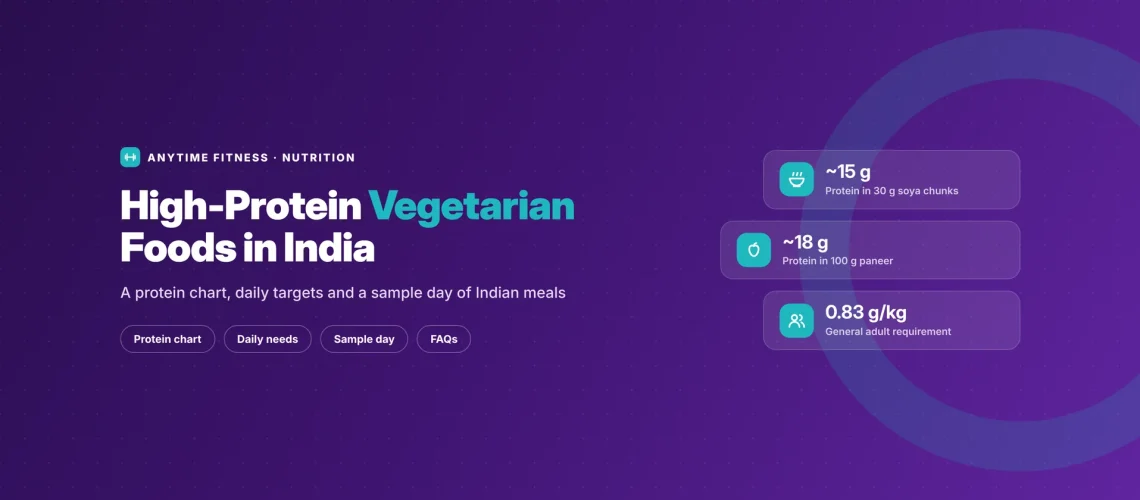
A common worry for vegetarians who start going to the gym is whether they can get enough protein without eggs or meat. With some planning, the answer is yes. Indian kitchens already have excellent protein sources; the challenge is usually portion size and consistency across the day.
Key takeaways
- Adults generally need about 0.83 g of good-quality protein per kg of body weight a day (WHO/FAO/UNU).
- People who train regularly may benefit from more; the ISSN suggests 1.4–2.0 g/kg for most exercising individuals.
- ICMR-NIN’s 2024 dietary guidelines note that intakes above about 1.6 g/kg/day do not add further muscle gains from resistance training, and advise against relying on protein supplements to build muscle.
- Soya chunks, paneer, dals, rajma, chana, curd and peanuts are the easiest daily wins.
- Spread protein across 3–4 meals rather than one large serving.
How much protein do you need per day?
Most healthy adults need about 0.83 g of good-quality protein per kg of body weight per day; people doing regular strength training often aim higher, around 1.4–1.6 g/kg. For a 60 kg adult, that is roughly 50 g a day for general health, and about 85–95 g a day for someone training hard.
| Body weight | General health (~0.83 g/kg) | Regular strength training (~1.4–1.6 g/kg) |
|---|---|---|
| 50 kg | ~42 g | ~70–80 g |
| 60 kg | ~50 g | ~85–95 g |
| 70 kg | ~58 g | ~100–110 g |
| 80 kg | ~66 g | ~110–130 g |
These are general estimates for healthy adults. People with kidney disease, diabetes or other medical conditions, and pregnant or breastfeeding women, should get personalised advice from a doctor or registered dietitian.
High-protein vegetarian foods: protein per serving
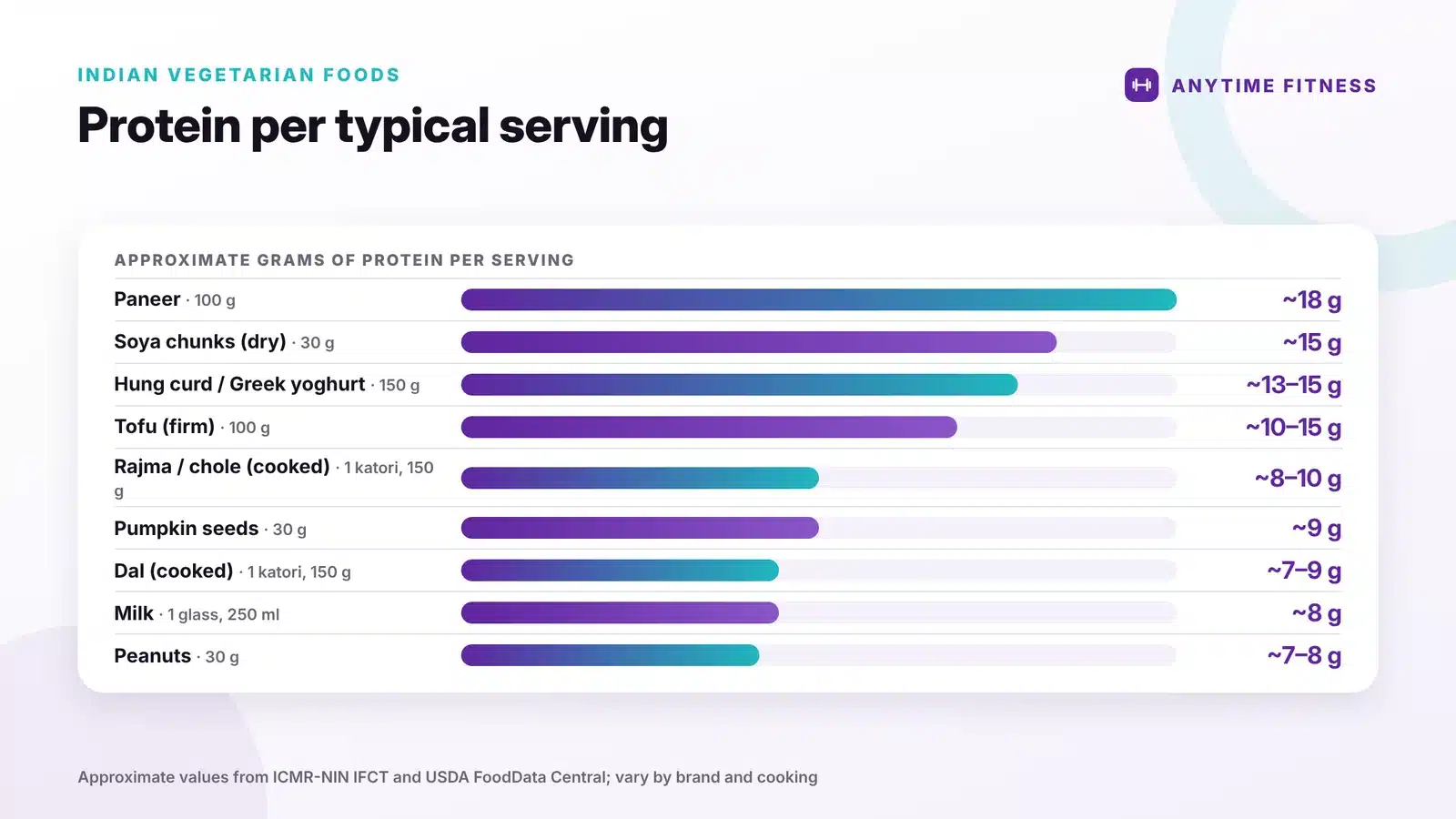
Per typical serving, soya chunks, paneer, hung curd and tofu give the most protein, while dals, rajma, chana, milk and peanuts are reliable everyday contributors. Values below are approximate and vary with variety, brand and cooking.
| Food | Typical serving | Protein per serving (approx.) | Per 100 g (approx.) |
|---|---|---|---|
| Soya chunks (dry) | 30 g | ~15 g | ~50 g |
| Paneer | 100 g | ~18 g | ~18 g |
| Hung curd / Greek yoghurt | 150 g | ~13–15 g | ~9–10 g |
| Tofu (firm) | 100 g | ~10–15 g | ~10–15 g |
| Rajma or chole (cooked) | 1 katori (150 g) | ~8–10 g | ~6–7 g |
| Moong / masoor / toor dal (cooked) | 1 katori (150 g) | ~7–9 g | ~5–6 g |
| Milk | 1 glass (250 ml) | ~8 g | ~3.2 g |
| Peanuts | 30 g (small handful) | ~7–8 g | ~25 g |
| Pumpkin seeds | 30 g | ~9 g | ~30 g |
| Curd (dahi) | 1 katori (150 g) | ~5 g | ~3–4 g |
| Eggs (for eggetarians) | 2 large | ~12 g | ~13 g |
Sources: ICMR-NIN Indian Food Composition Tables and USDA FoodData Central; rounded. Cooked values depend on how much water is used.
Can vegetarians build muscle?
Yes. Vegetarians can build muscle when they eat enough total protein and calories and follow a progressive strength training plan. Plant proteins are often lower in one or more essential amino acids, so variety matters. Combining cereals and pulses across the day, as traditional Indian meals already do, gives a more complete amino acid profile. Pair this with our beginner gym workout plan.
A sample high-protein vegetarian day
| Meal | Example | Approx. protein |
|---|---|---|
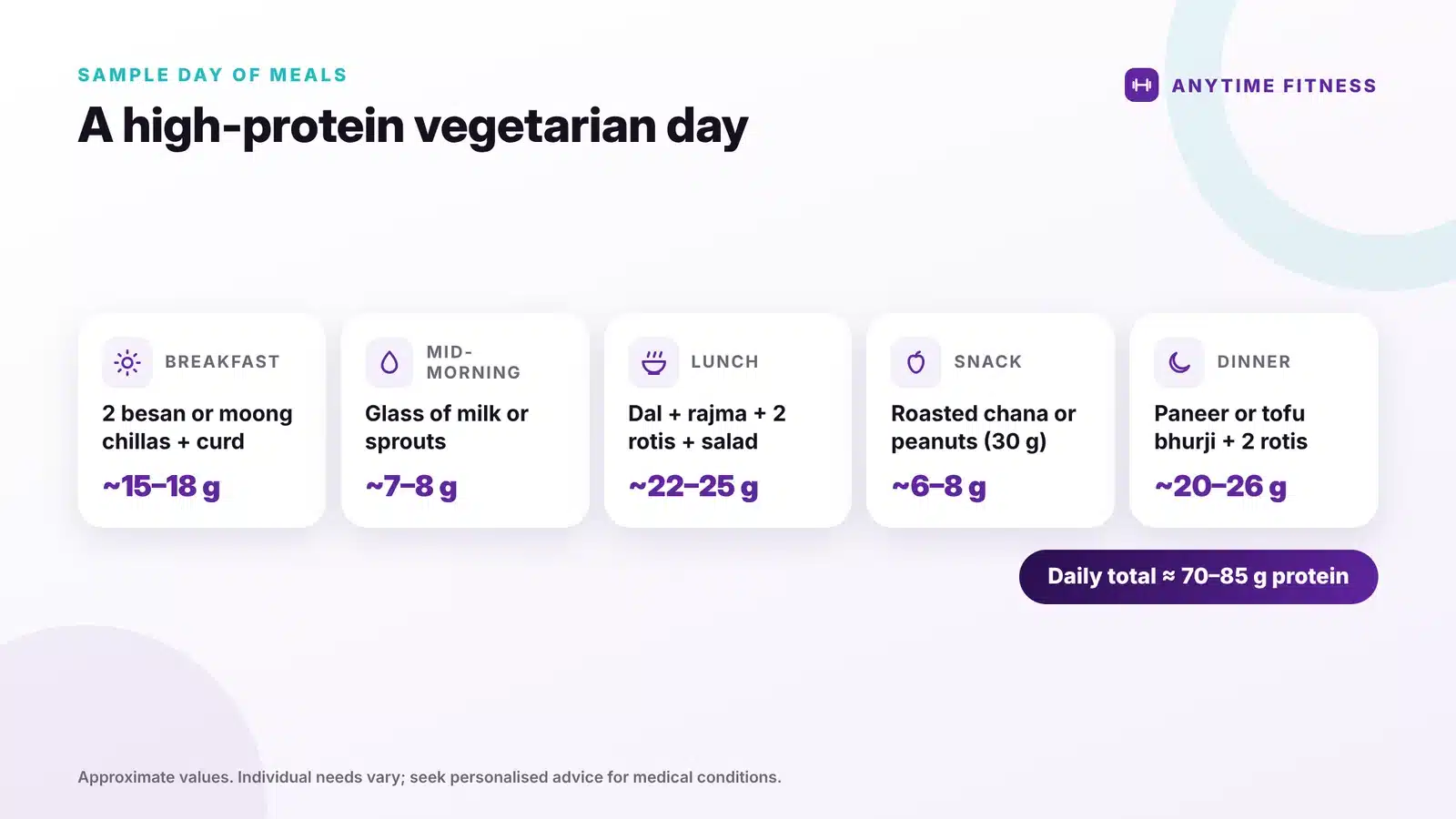
| Breakfast | 2 besan or moong chillas + 1 katori curd | ~15–18 g |
| Mid-morning | 1 glass milk or a small bowl of sprouts | ~7–8 g |
| Lunch | 1 katori dal + 1 katori rajma + 2 rotis + salad | ~22–25 g |
| Evening snack | 30 g roasted chana or peanuts | ~6–8 g |
| Dinner | 100 g paneer or tofu bhurji + 2 rotis + vegetables | ~20–26 g |
| Total | ~70–85 g |
Practical tips to add protein to Indian meals
- Add a katori of dal, rajma or chana to lunch and dinner, not just one meal.
- Use besan or moong dal for breakfast chillas instead of only maida or suji.
- Swap a sugary snack for roasted chana, peanuts or a glass of milk.
- Add soya chunks to pulao, sabzi or keema-style dishes.
- Make raita with hung curd for extra protein.
- Choose sprouts chaat as an evening snack.
Do you need protein powder?
Most people can meet their protein needs from food. ICMR-NIN’s 2024 dietary guidelines advise against relying on protein supplements to build body mass and caution against prolonged intake of large amounts of protein powder. If you find it hard to meet your target through food, speak to a registered dietitian before adding a supplement.
Training to build strength?
Pair good nutrition with a consistent routine at your nearest Anytime Fitness club.
In summary
Aim for a good protein source at every meal: dal, rajma, chana, paneer, soya, curd, milk or peanuts. Most active vegetarians can comfortably reach 70–100 g a day from food, which is enough to support strength training for most people.
Frequently asked questions
Which vegetarian food has the most protein?
Among common Indian vegetarian foods, soya chunks have the most protein by weight, about 50 g per 100 g dry. Paneer, tofu, hung curd, peanuts, pumpkin seeds and dals are also good sources.
How much protein do I need per day?
Most healthy adults need about 0.83 g of protein per kg of body weight daily. People who strength train regularly often aim for about 1.4–1.6 g/kg. Get personalised advice if you have a medical condition.
Can I get 100 g of protein a day as a vegetarian?
Yes, with planning. Include paneer or tofu, two or three katoris of dal or legumes, curd or milk, and a protein snack such as roasted chana or peanuts across the day.
Is paneer good for muscle gain?
Paneer is a good source of protein, about 18 g per 100 g, and also contains fat, so portion size matters if you are managing calories.
Is soya safe to eat every day?
Moderate amounts of soya foods as part of a balanced diet are considered safe for most healthy people. If you have a thyroid condition or other health concerns, check with your doctor.
Do I need whey protein to build muscle?
No. Most people can meet their needs from food. ICMR-NIN advises against relying on protein supplements to build body mass. Speak to a dietitian if you struggle to meet your target.
How can I increase protein in an Indian vegetarian diet?
Add dal or legumes to every main meal, use besan or moong chillas for breakfast, snack on roasted chana or peanuts, and include paneer, tofu, soya or hung curd daily.
Sources
- WHO/FAO/UNU (2007). Protein and amino acid requirements in human nutrition
- Jäger R. et al. (2017). ISSN Position Stand: protein and exercise. J Int Soc Sports Nutr
- ICMR-National Institute of Nutrition: Dietary Guidelines for Indians (2024)
- ICMR-NIN: Indian Food Composition Tables (IFCT 2017)
- USDA FoodData Central (nutrient values)
Last updated: 19 October 2026. This article is for general information and is not medical, financial or legal advice.

 by